

Complete guide to PRP injections in Montreux and on the Vaud Riviera: treated areas, procedure, risks and criteria for choosing a Swissmedic certified practitioner.
Certified Metaesthetics Practitioners · Montreux · Vaud Riviera
Chapters
ToggleTo remember
- PRP (platelet-rich plasma) is a regenerative medicine technique using a concentrate prepared from the patient's own blood.
- In Montreux, on the Vaud Riviera, the choice of a practitioner should be based on medical qualification, hygiene, traceability of the sample, clarity of the indication and quality of follow-up.
- PRP can be discussed for certain aesthetic indications: radiance, skin quality, superficial fine lines or support for hair density, depending on the case.
- Results are progressive and vary depending on the indication, age, skin condition, medical history and lifestyle habits.
- PRP does not replace surgery, does not correct significant sagging, and does not treat all causes of hair loss.
- A promise of guaranteed regrowth, rapid rejuvenation, or identical results for everyone should encourage caution.
Metaesthetics certified practitioners — how does visibility work?
On Metaesthetics, a practitioner's visibility isn't tied to an advertising budget. It directly reflects their certification level, the rigor of their verified accreditations, and the quality of their documented follow-up care. The highest-ranked practitioners are those with objectively the highest clinical competence—not necessarily those with the strongest social media presence. In Montreux, where discretion, authenticity, and quality of care are paramount, this transparency is what makes the difference.
For who
PRP is available to women and men living in Montreux, Clarens, Territet, Veytaux, Vevey, La Tour-de-Peilz, or in neighboring towns along the Vaud Riviera. It may also be of interest to patients seeking a discreet, gradual treatment that is compatible with an active professional or social life.
In aesthetic medicine, PRP is often considered by patients who wish to gradually improve their skin quality or address certain hair concerns without immediately resorting to a more invasive approach. It can appeal to those seeking a method that uses a sample of their own blood, provided the indication is appropriate.
In Montreux, where discretion, naturalness and quality of follow-up often count for a lot, brighter skin, sometimes a more regular texture or support for early hair loss can be realistic goals — a spectacular transformation or certain regrowth should never be promised.
Indications often debated
Skin radiance & texture
Dull complexion, tired skin, uneven texture, or the impression of less dense skin. Results are gradual and vary depending on age and skin quality.
Superficial fine lines
When skin quality is paramount, PRP cannot fill deep wrinkles—other options are more suitable.
Area of vision
After careful analysis of the area and expectations. Delicate area requiring precise indication and an experienced practitioner.
Hair density
Thinning hair, early signs of thinning, or hair loss, depending on the cause. A medical evaluation is often necessary before treatment.
Limitations and contraindications
- PRP does not treat all causes of hair loss — a medical assessment may be necessary to look for a hormonal, deficiency, inflammatory, genetic or drug-related origin.
- It does not replace a hair transplant when hair loss is advanced or when certain areas are permanently bald.
- It does not correct significant skin laxity, marked volume loss, or deep structural wrinkles.
- Certain blood diseases, infections, active inflammations, medical treatments or particular situations may lead the practitioner to postpone or advise against the procedure.
- Pregnancy, breastfeeding, or an unstable health condition must be reported during the consultation.
- An expectation of immediate, spectacular or definitive results is generally not compatible with the spirit of PRP.
Process
In Montreux, a proper PRP treatment begins with a medical consultation. The practitioner assesses the patient's needs, the condition of their skin or scalp, their medical history, any current treatments, and any potential contraindications. This step determines whether PRP is suitable or if another approach would be more appropriate.
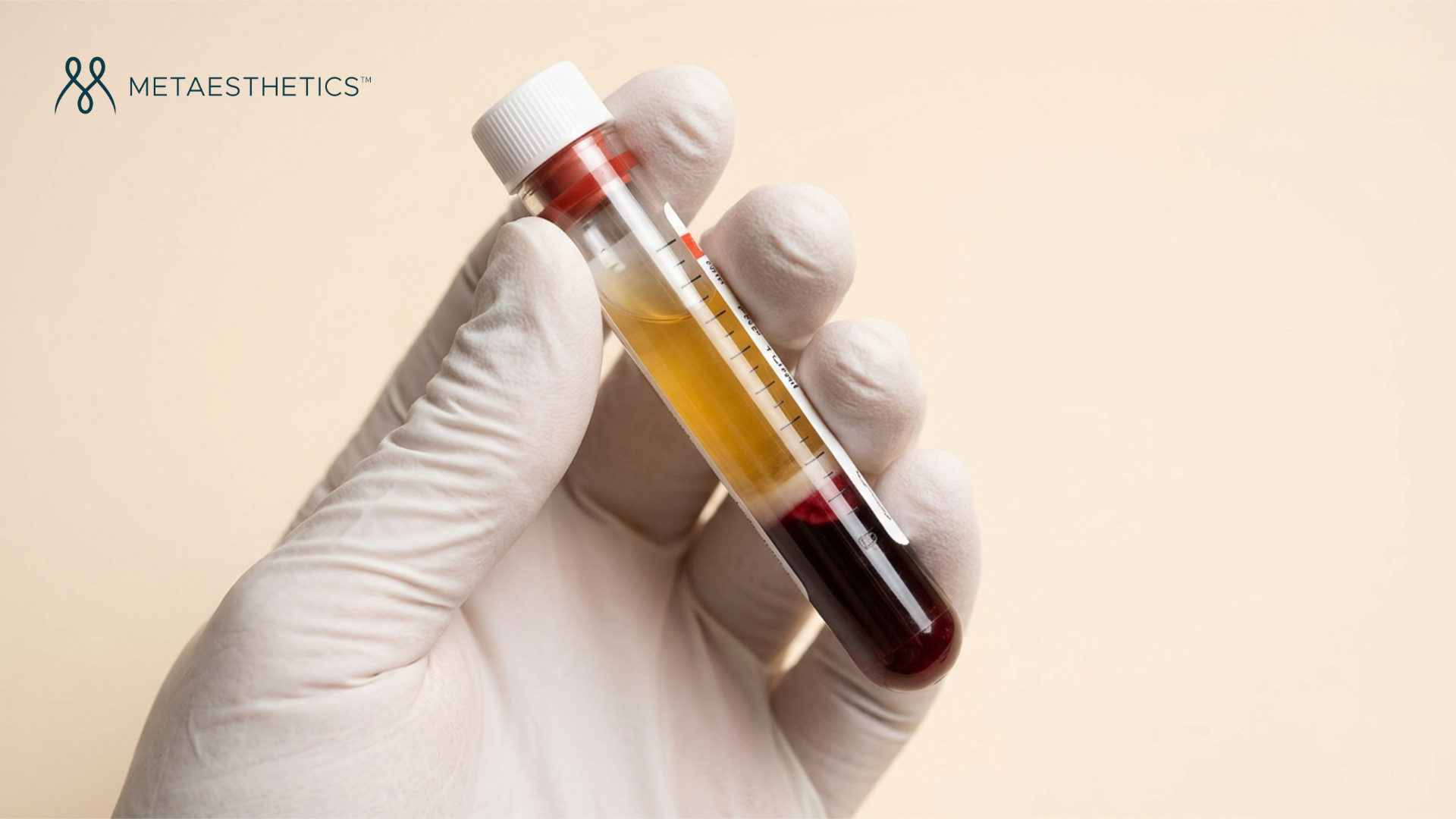
When PRP is considered, a blood sample is taken under strict hygiene conditions. The blood is then prepared using a medical device designed to separate the different components and obtain a platelet-rich fraction. Traceability of the blood sample, the equipment used, and the reinjected product is an important safety element.
The PRP is then administered to the affected area—scalp or specific areas of the face—depending on the indication. The procedure must remain medically supervised: even if the product comes from the patient, the injection requires a specific technique, knowledge of anatomy, and rigorous aseptic technique.
In Montreux , follow-up care is important for patients who live between the Vaud Riviera, Lausanne, Valais, or abroad. PRP is often used as part of a gradual approach—it is rarely chosen for immediate or dramatic changes.
Expected results
The results of PRP generally appear gradually. For the skin, some patients report improved radiance, a more even texture, or a feeling of firmer skin. For the hair, the goal may be to address early-stage thinning, support scalp health, or complement a more comprehensive hair care strategy.
The effects vary from person to person. They can depend on age, the quality of the plasma obtained, general health, skin quality, the duration of hair loss, associated causes, and lifestyle habits.
What PRP cannot promise: restoring all lost hair, eliminating deep wrinkles, or replacing surgery. Honest information helps patients understand the potential benefits, but also the real limitations of this approach.
Risks and side effects
PRP uses a sample taken from the patient themselves, but this does not mean the treatment is risk-free. Like any procedure involving blood sampling, biological preparation, and injections, it must be carried out under strict medical supervision.
Common side effects
- Redness, sensitivity, swelling or small bruises may occur at the injected areas.
- Temporary discomfort of the scalp or face depending on the area treated.
- A feeling of tension, localized heat, or temporary sensitivity.
Possible complications
- The result was deemed insufficient, particularly when the indication was not optimal.
- Risk of infection if hygiene, preparation or injection conditions are not rigorous.
- Rarely, discomfort related to blood sampling or an unusual reaction may occur, requiring medical advice.
Signs that should prompt you to contact a healthcare professional quickly include: persistent redness, unusual pain, significant swelling, fever, discharge, prolonged discomfort, or unexpected changes. Medical follow-up should always be the first course of action.
Suites and recovery
The after-effects of PRP are often minimal. It's common to resume daily activities quickly, following the practitioner's recommendations. However, redness, local sensitivity, small marks, or slight swelling may appear temporarily.
After a facial PRP treatment, the skin may feel reactive for a short time. After a scalp PRP treatment, sensitivity or a feeling of tightness may be experienced. The practitioner will usually provide instructions regarding exercise, saunas, sun exposure, skincare, washing hair, coloring, or applying products to the treated area.
For residents of Montreux and the Vaud Riviera, the possibility of clear follow-up can be particularly reassuring—especially if an unusual reaction occurs or if the treatment is part of a broader aesthetic strategy. Responsible care includes support, explanation of the results, and possible adjustments to the treatment plan.
alternatives
PRP is not always the most suitable option. Depending on the objective — skin, hair, radiance, density, sagging, wrinkles or volume — other approaches can be discussed during a consultation.
- Dermatological care and medical cosmetology: They can complement radiance, hydration, texture or skin tolerance.
- Skinboosters or injectable hydration treatments: They can be considered when the main objective is deep hydration or skin quality.
- Hyaluronic acid : It can be discussed when a loss of volume, a hollow, or a pronounced groove is prominent.
- Lasers, peels or skin stimulation technologies: They can be useful for certain irregularities, fine lines, spots or alterations in skin texture.
- Medical hair treatments: They may be necessary when hair loss is linked to a specific cause identified by the doctor.
- Hair transplant: It can be discussed when hair loss is advanced or when certain areas no longer respond to stimulation approaches.
- Time for reflection or second opinion: Waiting, conducting an assessment, or seeking a second opinion may be preferable when the indication is not clear.
Questions to ask during a consultation
Here are the essential questions to ask your practitioner before making any decision:
F.A.Q
What does PRP mean?
PRP stands for platelet-rich plasma. It is a concentrate prepared from the patient's own blood, containing platelets involved in certain natural repair mechanisms. In aesthetic medicine, it may be considered for skin or hair treatments, depending on the individual case.
Is PRP a natural approach?
PRP is derived from the patient's own blood, which can be seen as a biological approach. However, this does not mean it is risk-free or suitable for everyone. The collection, preparation, and injection must remain under medical supervision.
Can PRP make hair regrow?
PRP can sometimes be used to treat certain types of hair loss, especially when the indication is appropriate. However, it cannot guarantee regrowth or restore follicles that are no longer active. A medical evaluation may be necessary before making a decision.
Is PRP suitable for both women and men?
Yes, depending on the case. Both women and men can consult for skin quality or hair problems. However, the analysis must take into account possible causes, hormonal context, medical history, and expectations.
Can PRP replace a hair transplant?
Not always. When hair loss is advanced or certain areas are permanently bald, a hair transplant may be considered. PRP (platelet-rich plasma) therapy can sometimes be considered as a complement or at an earlier stage, depending on medical advice.
Does PRP improve wrinkles?
PRP can sometimes improve the overall appearance of the skin, its radiance, or certain superficial fine lines. It does not fill deep wrinkles and is not a substitute for fillers, skin technology, or surgery when those options are more appropriate.
Is PRP suitable for sensitive skin?
Sensitive skin is not always a contraindication for PRP, but it should be reported. The practitioner assesses skin tolerance, active inflammation, medical history, and current skincare before recommending treatment.
Is it possible to return to work after a PRP?
It is common to resume normal activities quickly, following the practitioner's recommendations. Redness, marks, or sensitivity may be temporarily visible, especially after PRP treatment of the face or scalp.
Is it possible to have a PRP done before an important event in Montreux?
It's best to avoid starting a treatment just before an important event. Marks, redness, or sensitivity may appear. The timing should be discussed with the practitioner to minimize unforeseen problems.
Is PRP suitable for people who are frequently exposed to the sun?
It may be necessary depending on the circumstances, but sun exposure, outdoor activities, and skin sensitivity should be discussed during a consultation. The practitioner will explain the general precautions to take—an important point on the Vaud Riviera where sunshine is abundant.
Why do PRP results vary so much?
Results may vary depending on age, health status, skin quality, the cause of hair loss, lifestyle habits, and the initial indication. Therefore, a medical consultation is essential before any treatment.
How to recognize a serious PRP treatment in Montreux?
Proper care relies on a medical consultation, blood collection under hygienic conditions, traceable preparation, a clear explanation of the benefits and limitations, informed consent, and accessible follow-up. These are precisely the criteria that Metaesthetics verifies for each listed practitioner.
Why do PRP fees vary from one practice to another?
Prices may vary depending on the practitioner's qualifications, the complexity of the condition, the area treated, the equipment used, the time spent on the procedure, and the follow-up care offered. A personalized quote is essential after a consultation.
What should be done if the PRP result is disappointing?
The first step is to consult with the practitioner to analyze the progress, the initial indication, and the available options. Depending on the case, an alternative strategy, further testing, or a second opinion may be recommended.
Why go through Metaesthetics to find a PRP practitioner in Montreux?
On Metaesthetics, the most visible practitioners are those whose competence is objectively the best certified—not those who invest the most in advertising. In Montreux, where discretion, naturalness, and quality of care are paramount, our platform allows you to identify practitioners whose accreditations are verified, whose care is documented, and whose clinical ethics are recognized.
Metaesthetics selects and certifies its partner practitioners according to objective and verified medical criteria: specialized training, recognized accreditations, documented follow-up protocols, and clinical ethics. A practitioner's visibility on our platform directly reflects their level of certification —the highest-ranked practitioners are those whose competence is most rigorously proven, not necessarily those who invest the most in advertising. In Montreux and on the Vaud Riviera, our commitment is to make medical competence visible, verifiable, and accessible to every patient.
Metaesthetics is an independent medical directory. The information in this guide is general and for educational purposes only—it does not constitute medical advice and is not a substitute for consultation with a qualified practitioner. For advice tailored to your specific situation, medical history, and expectations, consult a certified practitioner.
 Call me back