

PRP: a complete guide to platelet-rich plasma
Welcome to our page dedicated to PRP (platelet-rich plasma). Here you will find clear and balanced information to support your decision-making journey — without ever replacing a consultation with one of our partner doctors or surgeons, whose visibility reflects their recognised expertise.
Introduction — When the body becomes its own healer
In recent years, a discreet yet profoundly innovative approach has been transforming how medicine views tissue repair. This approach is based on a simple idea: using the patient's own biological resources to stimulate natural regeneration mechanisms. This is precisely the principle behind PRP, or platelet-rich plasma.
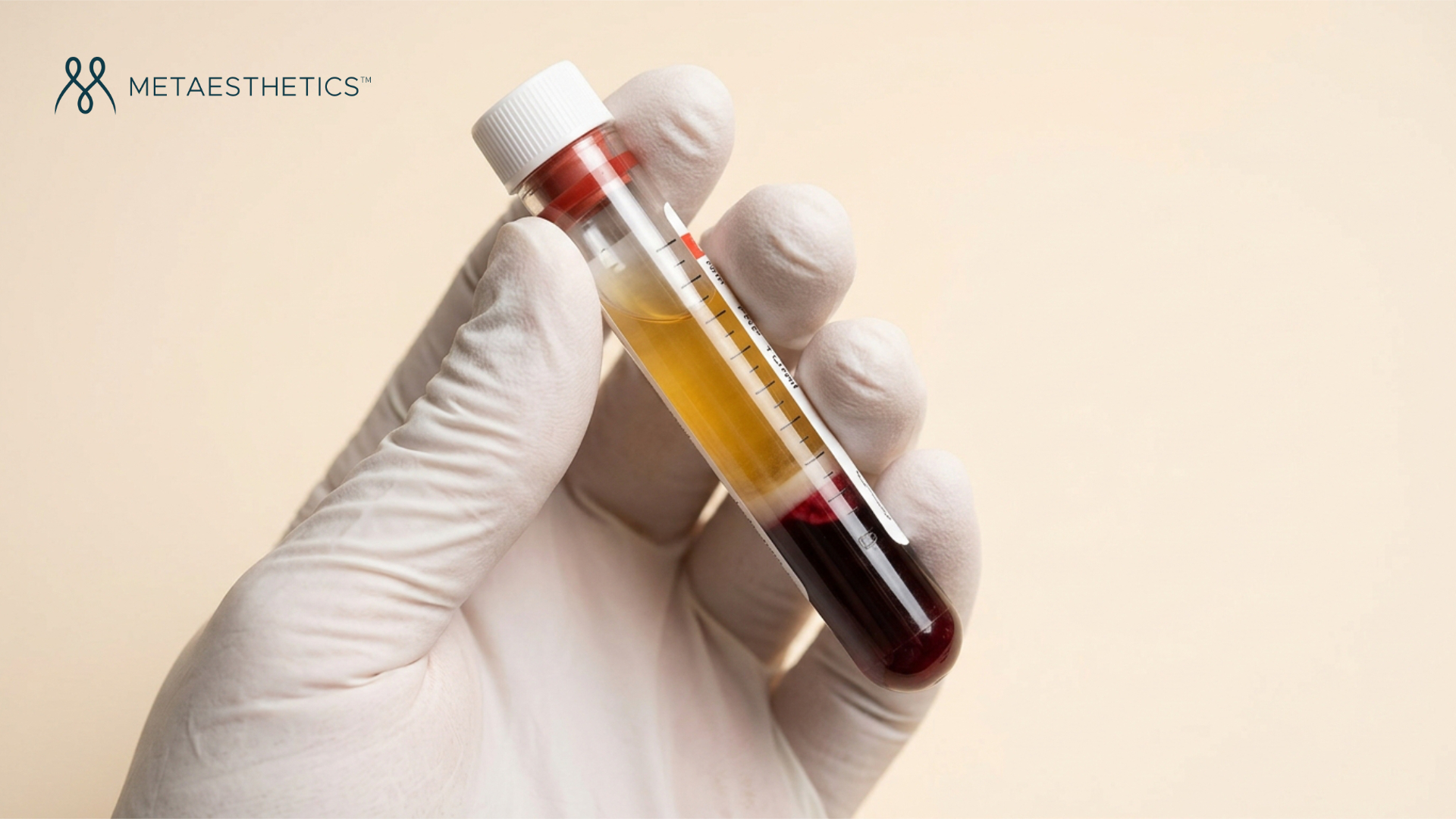
PRP is obtained from a simple blood draw. The blood is then processed to isolate a fraction particularly rich in platelets — small cells that play a central role in wound healing and tissue repair. This biological concentrate is then reinjected into the target area to stimulate natural regeneration processes.
Initially developed in surgery and sports medicine to promote healing of damaged tissues, this technique has gradually found its place in numerous medical fields: dermatology, aesthetic medicine, orthopaedics, hair restoration and even dental surgery.
Its principle attracts growing attention: unlike many aesthetic treatments, PRP introduces no foreign substance into the body. The patient is both the donor and the recipient of the treatment. This feature largely explains the increasing interest in this regenerative approach.
This article offers a complete guide to PRP: its biological function, medical and aesthetic applications, what a session involves, the results that can reasonably be expected and the precautions to be aware of before considering treatment.
How does PRP work? The science explained simply
Blood: a natural source of repair
Human blood is composed of several elements: red blood cells, which carry oxygen; white blood cells, involved in immune defence; plasma, the nutritive liquid; and platelets, also known as thrombocytes.
Platelets play an essential role in healing. When tissue is damaged — a cut, inflammation or micro-injury — they release biological substances called growth factors. These molecules send signals to surrounding cells to trigger tissue repair.
The principle of PRP is to concentrate these platelets in order to locally increase the quantity of growth factors available in a specific area.
Growth factors: biological messengers of regeneration
Growth factors are proteins naturally present in the blood. Their role is to orchestrate cellular repair processes: collagen production, stimulation of new cells, improved vascularisation and accelerated healing.
When PRP is injected into a tissue, these growth factors can stimulate local cells and promote a biological environment conducive to regeneration.
How PRP is prepared
The preparation of platelet-rich plasma generally involves three steps. A blood sample is first taken, similar to a routine blood test. The tube is then placed in a centrifuge to separate the different blood components by density.
This spinning isolates the plasma fraction containing a high concentration of platelets. This fraction is then collected and prepared for reinjection into the target area.
Why is it called an autologous treatment?
The term autologous means that the injected product comes from the patient themselves. This characteristic largely explains PRP's tolerability profile: the risk of allergic reaction is extremely low since the body naturally recognises its own cells.
PRP, PRF and i-PRF: what are the differences?
Over the years, several PRP variants have been developed. PRF (platelet-rich fibrin) contains more fibrin, a protein involved in scar tissue formation. i-PRF, or injectable PRF, is a more recent development designed to prolong the release of growth factors.
Depending on the medical indication and the practitioner's protocol, these different preparations can be used to optimise the biological stimulation of tissues.
PRP applications: a treatment with many faces
PRP and facial rejuvenation
In aesthetic dermatology, PRP is often used to improve skin quality. The goal is not to alter facial volumes but rather to stimulate cutaneous regeneration.
The treatment can help improve skin texture, complexion radiance and dermal density through progressive stimulation of collagen production. It is also used to soften certain acne scars or to improve the appearance of delicate areas such as the under-eye region.
The popular term "vampire facial" comes from the media coverage of this technique, but it does not always reflect the medical reality of the treatment. In practice, PRP is often combined with micro-perforation techniques (microneedling) to facilitate plasma penetration into the skin.
PRP and hair loss
Hair loss is one of the most studied indications for PRP. In certain forms of alopecia, particularly androgenetic alopecia, hair follicles can be stimulated by the growth factors present in the plasma.
The goal is generally to slow hair loss and promote denser regrowth in areas where follicles are still active.
In some cases, PRP can be used alongside other hair treatments or as part of a hair transplant to improve healing and graft vitality.
PRP in sports medicine and orthopaedics
In sports medicine, PRP is used to support the repair of certain musculotendinous injuries. Chronic tendinopathies, sprains or certain muscle injuries may benefit from biological stimulation that promotes healing.
PRP is also being studied for certain forms of osteoarthritis, particularly in the knee. Scientific findings remain variable across studies, but some patients report improvement in symptoms and joint function.
Other medical applications
Beyond aesthetics and orthopaedics, PRP is also being explored in other medical fields. In dental surgery, it can promote bone regeneration and gingival healing. In dermatology, it is studied for improving the healing of certain chronic wounds.
Other avenues of research are being evaluated, including in ophthalmology, neurology and certain dermatological conditions.
What a PRP session involves
A PRP session generally begins with a preliminary medical consultation. This step allows the practitioner to assess the indication, examine the area to be treated and verify the absence of contraindications.
On the day of treatment, a blood sample is taken. After centrifugation, the platelet-rich plasma is collected and then injected into the target area using micro-injections or applied following skin stimulation, depending on the indication.
A session typically lasts between thirty minutes and one hour. Recovery is usually straightforward: mild redness, moderate swelling or small bruises may appear temporarily at the injection site.
Resuming daily activities is often possible quickly, although the practitioner may provide certain recommendations depending on the treated area.
Results, durability and realistic expectations
The effects of PRP generally appear gradually. The biological processes stimulated by the growth factors take time to produce visible changes.
For skin treatments, patients often report a progressive improvement in skin texture and radiance over the following weeks. For hair treatments, results may be observed over several months, depending on the hair growth cycle.
Results can vary considerably from one patient to another. Age, general health, lifestyle and the quality of the treated tissue all influence the biological response to treatment.
In many cases, multiple sessions are recommended to progressively stimulate the tissues and maintain the results obtained.
Risks and side effects
PRP generally has a favourable safety profile, largely due to its autologous nature. Nevertheless, like any medical procedure involving injections, certain side effects can occur.
The most common effects are moderate pain at the injection site, temporary redness or a small bruise. These typically resolve spontaneously within a few days.
Serious complications remain rare but can include local infection or prolonged inflammatory reaction. This is why the procedure must be performed in a rigorous medical setting.
Certain situations may constitute contraindications, including certain clotting disorders, local infections or certain systemic diseases. A preliminary medical assessment is therefore essential.
Choosing a qualified practitioner
PRP is a medical procedure that must be performed by a doctor trained in this technique. Depending on the indication, this may be a dermatologist, aesthetic doctor, rheumatologist or sports medicine physician.
During the initial consultation, it is reasonable to ask about the practitioner's experience, the protocols used and the results typically observed in similar situations.
A serious professional will take the time to assess whether the treatment is appropriate, explain the potential benefits as well as the limitations, and propose suitable follow-up.
PRP and regenerative medicine: a future perspective
PRP sits within a rapidly growing field: regenerative medicine. This approach aims to stimulate the body's natural ability to repair its own tissues rather than simply masking symptoms.
Research continues to explore how to optimise platelet concentration, improve growth factor release and tailor protocols to each medical indication.
In the future, PRP could be combined with other biological technologies — such as certain cell therapies — to further amplify tissue regeneration capabilities.
Conclusion — A medicine that trusts the body
Platelet-rich plasma represents a distinctive approach in modern medicine. Rather than introducing external substances, it draws on the patient's own biological resources to stimulate tissue repair.
This philosophy explains the growing interest in PRP across fields as varied as dermatology, hair medicine and orthopaedics.
It is, however, neither a miracle treatment nor a universal solution. Results depend on many individual factors and must always be assessed within the context of a personalised medical consultation.
If you are considering PRP treatment, the first step is to consult a qualified doctor to assess whether this approach is suited to your situation and goals.