

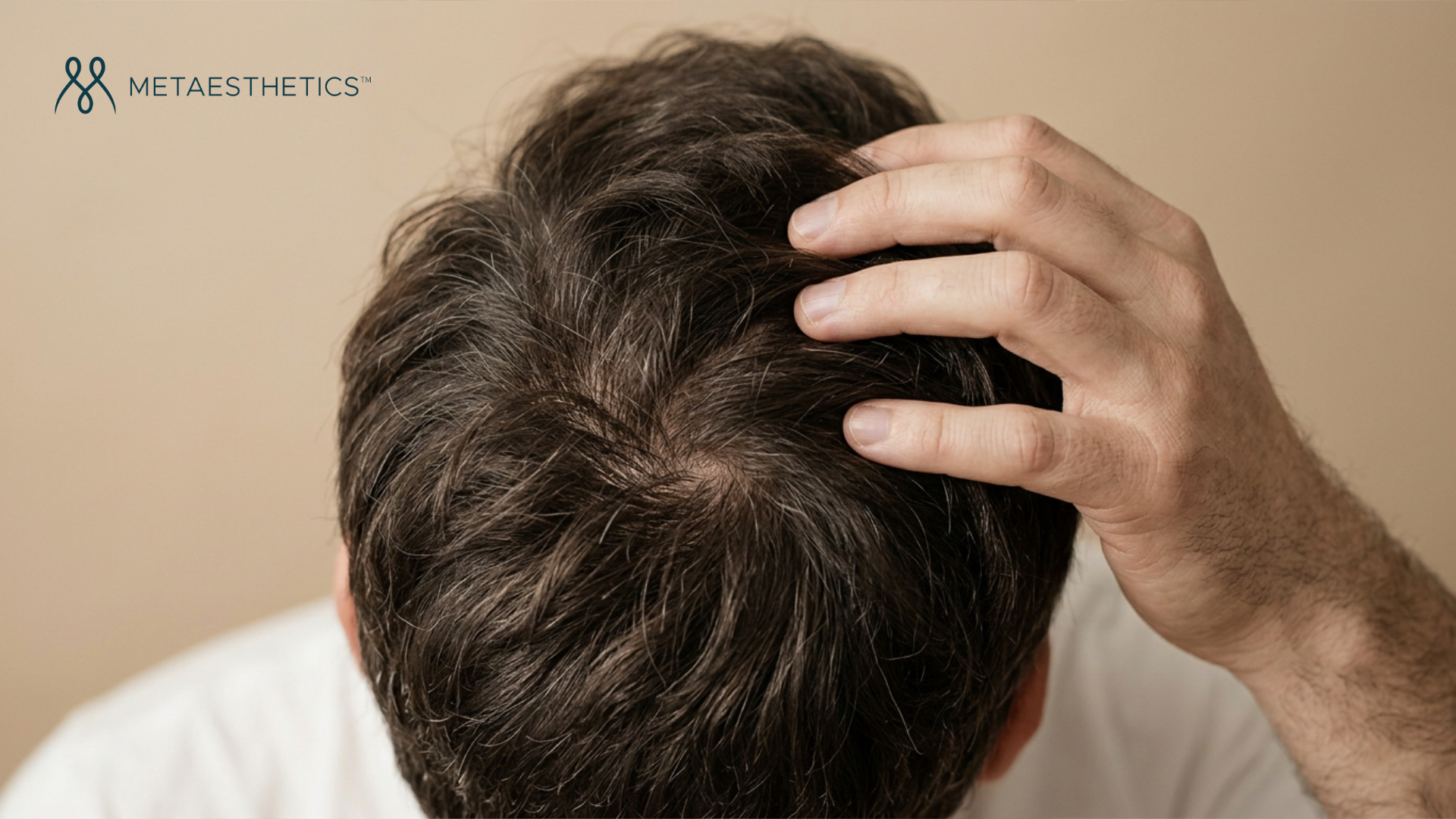
Hair transplant and hair loss treatments: a complete guide
Welcome to our page dedicated to hair treatments and hair transplantation. Here you will find clear and balanced information to support your decision-making journey — without ever replacing a consultation with one of our partner doctors or surgeons, whose visibility reflects their recognised expertise.
Introduction — When hair loss becomes a medical matter
Losing your hair is never trivial. Behind a common phenomenon — sometimes seemingly unremarkable — often lies a deep concern, tied to self-image, confidence and how we see ourselves over time. Yet hair medicine remains a field where information is often confusing, fragmented or even misleading.
Between dietary supplements with vague promises, poorly explained technological devices and transplant clinics with varying standards, patients frequently move forward without reliable guidance. Hair loss is not a uniform inevitability: it responds to precise biological mechanisms that require a thorough diagnosis before any decision is made.
This guide has been designed to provide a comprehensive, nuanced and structured overview of existing solutions — from daily care to surgical hair restoration — always placing expertise, safety and long-term results at the centre of the discussion.
Understanding hair and hair loss
Hair is produced by the hair follicle, a complex structure located in the scalp. Each follicle follows a natural cycle consisting of three phases: a growth phase (anagen), a transition phase (catagen) and a resting phase (telogen).
It is normal to lose between 50 and 100 hairs daily. Hair loss becomes concerning when it intensifies, persists or visibly changes hair density.
The most common cause is androgenetic alopecia, linked to the follicles' sensitivity to DHT (dihydrotestosterone), a hormone derived from testosterone. It leads to progressive hair miniaturisation.
Other forms exist: telogen effluvium (reactive shedding), alopecia areata (autoimmune), scarring or traction alopecia. Each type requires a different approach. This is why diagnosis is the cornerstone of any hair restoration strategy.
Hair care: a useful but limited foundation
Cosmetic care plays a real role in the quality of both hair and scalp. A balanced scalp environment can promote better growth conditions.
Certain active ingredients, such as ketoconazole or zinc, can improve scalp health. Vegetable oils nourish the hair fibre, while massage can stimulate microcirculation.
However, it is essential to understand that these approaches do not address the underlying causes of androgenetic alopecia. They support a treatment plan but cannot replace one.
Medical treatments: the foundations
Minoxidil is often the first-line treatment proposed. It extends the hair growth phase and can improve density in some cases. Results typically appear after several months and require continuous use.
Finasteride works by reducing DHT production. It can slow the progression of hair loss in men. Its use requires a medical prescription and a thorough discussion of the potential benefits and side effects.
For women, other hormonal approaches may be considered depending on the case. Here too, treatment depends on the initial diagnosis and individual profile.
Light therapy: a complementary technology
Photobiomodulation (LLLT) uses specific light to stimulate cellular activity within the follicle. It can improve hair quality and support other treatments.
Devices are available both in clinics and for home use. Results are often gradual and vary between individuals. This approach is generally part of a broader strategy, not a standalone solution.
Scalp injections: PRP, mesotherapy and innovations
PRP (platelet-rich plasma) uses the patient's own growth factors to stimulate the follicle. It can improve density and slow hair loss in certain situations.
Scalp mesotherapy involves injecting nutrients directly into the scalp. It primarily acts on the follicular environment.
More recent techniques, such as exosomes or polynucleotides, are currently being evaluated. Preliminary results are encouraging, but the level of evidence is still being established.
Hair transplant: understanding the surgery
Hair transplantation involves transferring follicles from a donor area to a thinning area. These follicles retain their genetic characteristics, which explains why results are long-lasting.
| Technique | Principle | Advantages | Limitations | Scarring |
|---|---|---|---|---|
| FUT | Strip method | High volume | Longer recovery | Linear |
| FUE | Individual extraction | No visible scar | More time-consuming | Micro-dots |
| DHI | Direct implantation | Precision | Technically demanding | Minimal |
| Robotic | Robot-assisted | Standardisation | High cost | Variable |
The choice of technique depends on the patient's profile, available donor density and realistic goals. Careful planning is essential.
Results and expectations
Transplanted hair is generally long-lasting. However, hair loss may continue in untreated areas. This is why ongoing medical treatment is often recommended.
The final result of a transplant appears gradually, typically between 10 and 12 months. The density achieved depends on numerous factors, including donor capacity and the quality of implantation.
Risks and vigilance
As with any medical procedure, hair treatments carry risks. The most common are mild (redness, discomfort), but more serious complications can occur, particularly with unregulated practices.
Medical tourism for hair transplants sometimes involves varying standards, especially when certain steps are performed by non-physicians. Choosing a qualified practitioner is essential.
A multimodal approach: the key to lasting results
In most cases, a single technique is not enough. The best results come from a tailored combination: medical treatment, stimulation, injections and, sometimes, surgery.
This approach requires precise coordination and ongoing follow-up. It illustrates an often-overlooked reality: hair restoration is a journey, not a one-off procedure.
Questions to ask during consultation
- What is the exact diagnosis of my hair loss?
- Which treatment should take priority in my case?
- What results can I reasonably expect?
- Who performs each step of the treatment?
- What follow-up is planned after the procedure?
Frequently asked questions
Is a hair transplant permanent?
Transplanted follicles are generally long-lasting, but hair loss may continue elsewhere.
Is PRP effective?
It can improve density in some cases, often as a complement to medical treatment.