

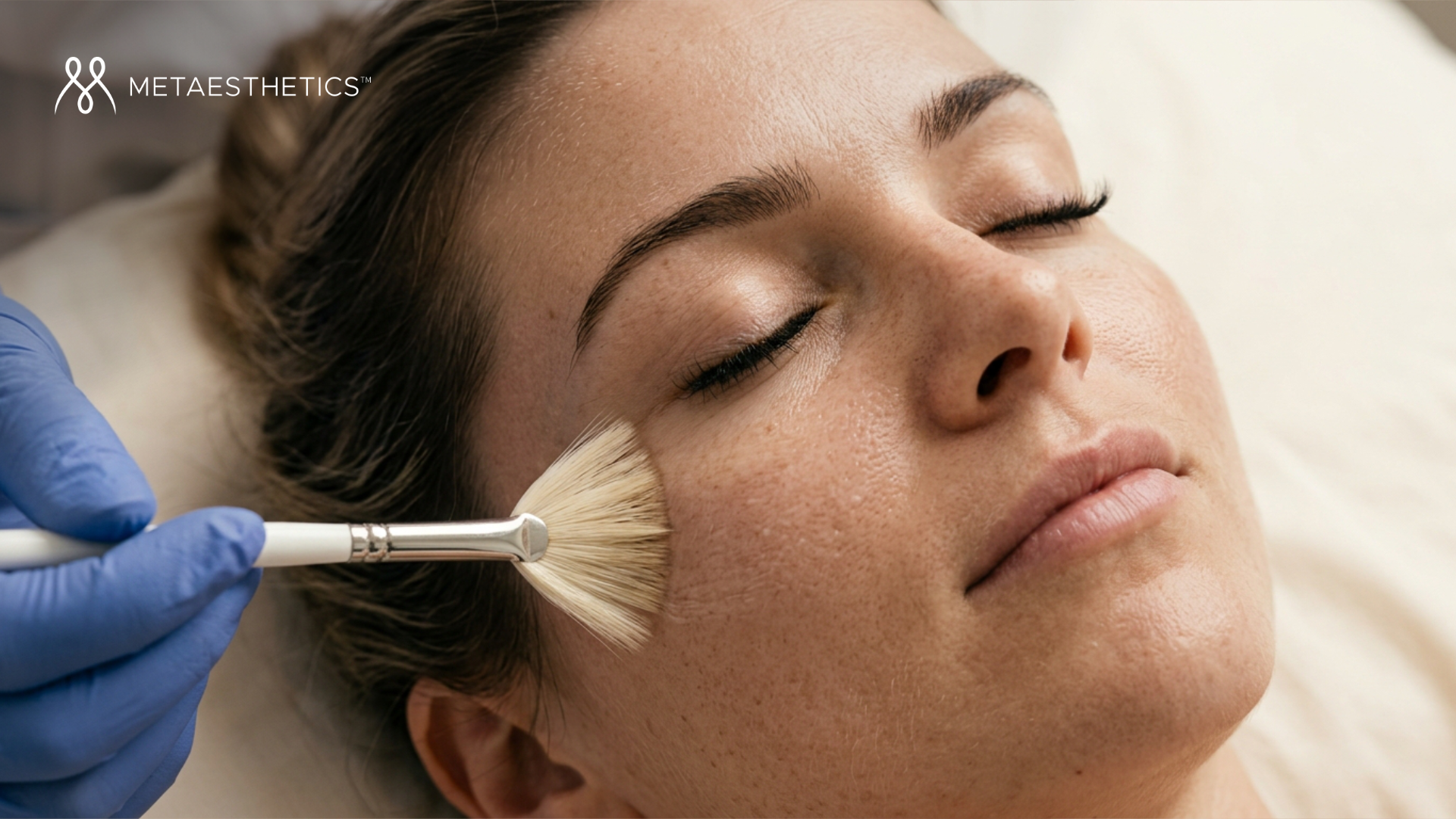
Chemical peel: a complete guide to understanding, choosing and ensuring safe treatment
Welcome to our page dedicated to chemical peels. Here you will find clear and balanced information to support your decision-making journey — without ever replacing a consultation with one of our partner doctors or surgeons, whose visibility reflects their recognised expertise.
In an aesthetic landscape dominated by technological innovation, the chemical peel remains paradoxically one of the most proven treatments — and often the least well understood. It is not a simple exfoliating treatment, but a medical procedure that relies on a precise understanding of the skin, chemistry and wound healing.
The principle seems straightforward: apply a chemical agent to produce controlled exfoliation. In reality, every parameter — type of acid, concentration, pH, application time — profoundly influences the result and safety.
This article aims to give you a comprehensive, rigorous and nuanced understanding of chemical peels, so that you can understand what is being proposed — and above all, under what conditions.
Key takeaways
- A chemical peel is a medical procedure for controlled skin regeneration.
- Several depths exist (superficial, medium, deep) with different indications and risks.
- The outcome depends as much on the technique as on preparation and aftercare.
- The practitioner's expertise is decisive for both safety and result quality.
Who is it for
A chemical peel can be suitable for anyone wishing to improve their skin quality: uneven tone, pigmentation marks, visible pores, acne or signs of ageing. It can be used correctively or preventively, depending on the case.
Indications must always be assessed individually. The same peel does not produce the same effects depending on skin type, skin thickness or dermatological history.
Limitations and contraindications
- Pregnancy and breastfeeding
- Active skin infections
- Recent isotretinoin use
- Darker skin types without appropriate preparation
How it works
A session always begins with a preliminary consultation. The practitioner analyses the skin, identifies the goals and selects the appropriate type of peel.
On the day of treatment, the skin is cleansed and degreased before the acid is applied. The sensation can range from a mild tingling to a more intense warmth depending on the depth.
After application, the acid is either neutralised or left to act according to the protocol. Soothing products are then applied.
Expected results
Results depend on the type of peel. Superficial peels often provide a radiance boost and gradual texture improvement. Medium peels can address pigmentation and fine lines. Deep peels, which are rarer, target more pronounced signs of ageing.
Results commonly appear progressively as the skin renews. Regular sessions can improve overall skin quality.
Risks and side effects
Like any medical procedure, chemical peels carry risks that vary according to depth and the patient's profile.
- Temporary redness and flaking
- Post-inflammatory hyperpigmentation
- Skin infections (rare)
- Scarring or depigmentation (very rare)
Deep peels, particularly phenol-based ones, require strict medical supervision due to their potential systemic impact.
Recovery and aftercare
Recovery depends on the type of peel. A superficial peel often allows a quick return to activities. A medium peel may require several days of social downtime. Deep peels involve a longer recovery period.
The skin generally goes through a flaking phase before revealing renewed skin underneath.
Alternatives
- Pigment laser
- Microneedling
- Intensive topical treatments
- Injectable biostimulators
Questions to ask during consultation
- Which type of peel is suited to my skin?
- What depth will be used?
- What are the specific risks in my case?
- What follow-up is planned after the session?
- What at-home care should I apply?
Frequently asked questions
Is a chemical peel painful?
The sensation depends on the depth. It can range from a slight tingle to a more noticeable warmth, generally temporary.
How long is the recovery?
Depending on the peel, recovery can range from a few hours to several days, or longer for deep peels.
Are the results permanent?
Results can be long-lasting, but skin ageing and sun exposure influence how well they are maintained.